Commercial and strata pressure cleaning
A clean site, with the wastewater paperwork to support it.
We clean car parks, bin bays, loading docks, service yards and other exterior surfaces using hot or cold water as the contamination requires. Where wastewater controls apply, the completed job file records the containment, the products and the disposal route. Because the day somebody asks where the wash water went, a clean slab is not the answer you need.
- Minimum attendance $450 including GST
- Site induction $0
- After hours scheduling available
- Completion documentation supplied
The parts of a site nobody wants to look at
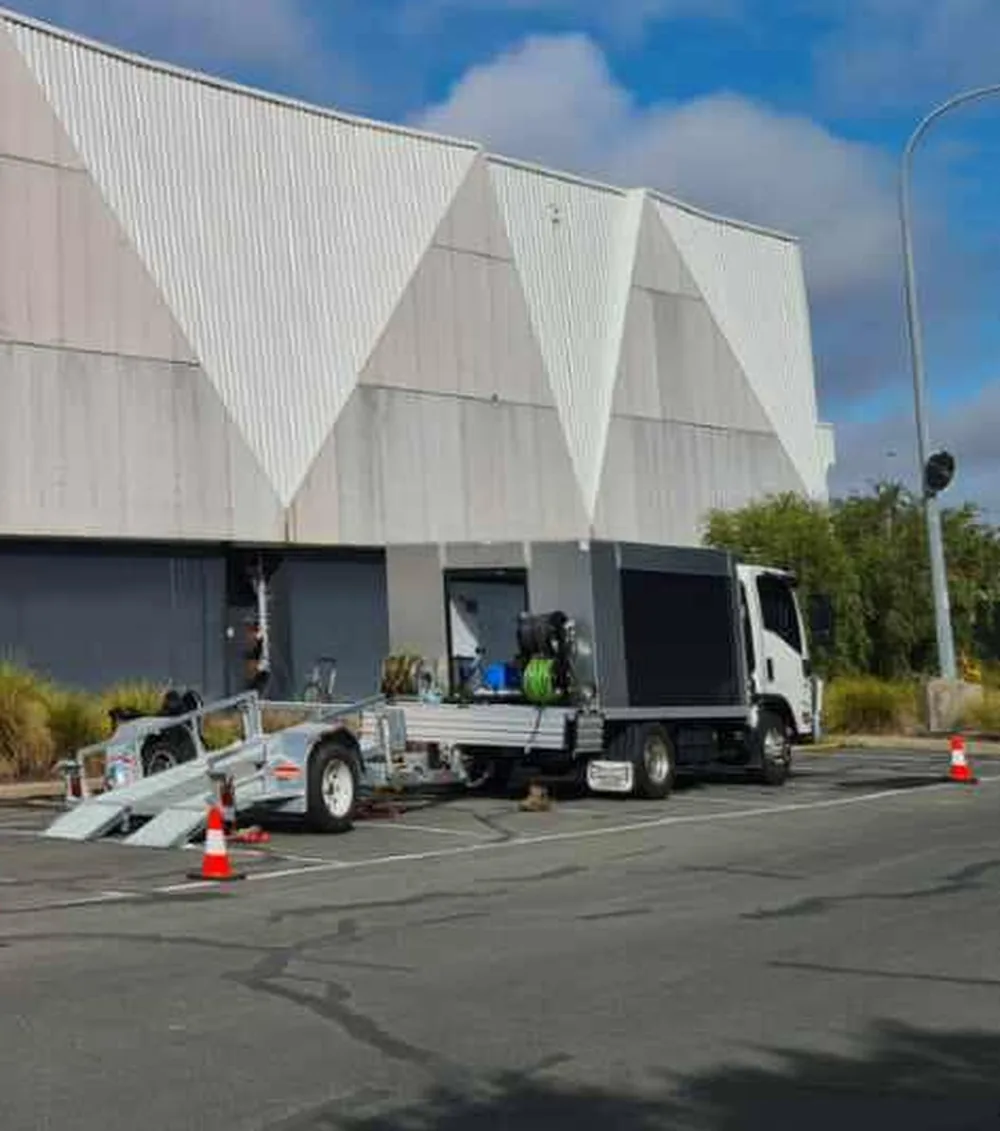
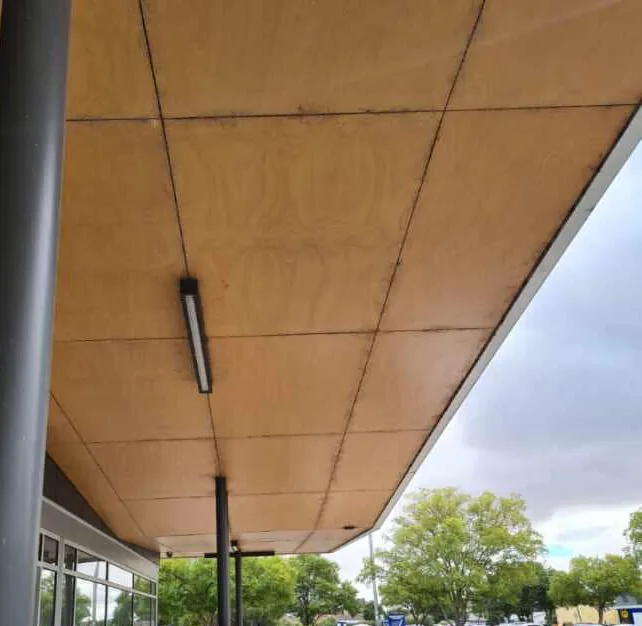
Car parks and access ramps
Tyre rubber, oil drip lines under the bays, and the ramp that goes slippery every time it rains. Done in sections so the site keeps working.
Bin bays and waste rooms
The job nobody wants and everybody complains about. Hot water, the right chemistry, and the water contained rather than pushed toward the nearest pit.
Loading docks and service yards
Grease off the dock face and the apron, spill marks, and the concrete where the pallet jacks have been dragging.
Back of house concrete around food businesses
The paved surrounds, the service door area and the drains around them. Not the canopy and not the ducting, which are a different trade.
Strata common areas
Entries, paths, stairwell landings, letterbox aprons and the visitor bays. Quoted per scheme, with recurring schedules discounted against a one off visit.
Building exteriors and awnings
Soft washed where the substrate needs it, with overspray controlled so the neighbours do not inherit your clean.
What is in the completion pack
Wash water must not enter the stormwater system, and the drain in your car park does not go to a treatment plant. What a building manager or a strata committee needs is the evidence, in a form that can go straight into a file if anybody ever asks. That is what the pack is.
A drain map before anything runs
Every inlet in the work area identified, and where it goes. The one outside is stormwater and it goes to a creek.
Containment set up and photographed
Inlets covered or bunded, the area bounded, and a picture of it before the water starts rather than a promise afterwards.
Dry first, wet second
Bulk contamination swept or vacuumed up before any water touches it, which is both the compliant sequence and the one that uses less water.
Recovery, and a lawful disposal route
The water is recovered rather than left to find its own way out, and it goes to a route that is lawful for what is in it and for that site.
The safety data sheets for what we used
Named products at recorded strengths, so your own compliance file has something in it besides an invoice.
Before and after photographs, and a completion summary
Before, after, the containment, and a summary of what was done. Where the disposal route issues a docket, the docket goes in too; where it does not, the pack records the route instead of inventing a receipt.
Service station forecourts and grounds, where the hard part is the disposal route
A forecourt is the clearest case of the argument this whole page makes. The slab is fuel, oil and rubber pressed into concrete under traffic, so it needs heat and it needs time. But the reason most operators cannot take the work is not the machine. It is that everything they lift has to go somewhere, and a forecourt is the one surface where sending it to the nearest drain is unmistakably wrong.
So we sell the route, not the pressure. Bulk oil comes off dry first. The wash water is fully contained and recovered rather than chased across the apron. Then it is discharged only through the site's own approved treatment and connection arrangement, or it leaves the site lawfully as a load. Never to stormwater, and never into a floor waste nobody has identified.
The bulk oil comes off dry, before any water
Absorbent and a sweep first, so the heavy hydrocarbon is picked up as a solid rather than turned into several hundred litres of oily water that then has to be dealt with.
The slab is bounded and the inlets are covered
Forecourt drainage is the whole risk on this job. Every inlet in the work area is identified and covered or bunded before the trigger is pulled, and photographed that way.
Hot water, because cold water only moves it
Fuel and oil pressed into a traffic worn slab do not lift with cold water. Heat dissolves them instead of spreading them, which is why this is hot water work and why an operator running cold has to decline it.
Every drop is recovered
The wash water is collected rather than allowed to run to the kerb. That is the difference between a forecourt clean and a forecourt spill, and it is the part nobody sees in a photograph of a wet slab.
It leaves by the site's own approved route
A service station already has a treatment and connection arrangement, and the recovered water goes through that or it leaves lawfully as a load. We ask to see the arrangement before we quote, not after.
Forecourt and grounds, not the canopy
The slab, the pump islands, the approaches, the bins and the paved surrounds. Kitchen exhaust and canopy cleaning sits under its own standard and is a different trade, so it is not ours.
Service station forecourts and grounds
Quoted per site
against the minimum attendance of $450 including GST
There is no rate on this line and there is not going to be one. Every Australian forecourt cleaner we could find quotes per site and none of them publishes a schedule, so a figure here would be invented rather than researched. What we can tell you before we come is what we will need to see: the drains, the separator if there is one, the trade waste arrangement the site already has, and the hours we are allowed on the slab.
This is forecourt and grounds work only. The canopy overhead, the kitchen exhaust and the ducting inside the shop are a different trade under a different standard, and we do not do them. If you need both, you need us and somebody else, and we would rather say that at the quote than at the gate.
Priced per site, and never by the hour
Commercial minimum attendance
$450
including GST
Below that the mobilisation costs more than the work. It is a floor, not a price.
Strata and commercial site induction
$0
including GST
Send us your induction, your site rules and your access requirements. Doing them is part of turning up.
Recurring schedules
Quoted per scheme
A repeating schedule is discounted against the same work bought as one off visits, because the setup and the site knowledge are already paid for. Figures come with the scope, not before it.
What moves a site price is the surface area, what is on it, whether the water can be recovered easily, when we are allowed on site and how far we have to carry a hose. All of that goes in writing before anything is agreed.
Insured, with the certificate of currency available on request, and a written scope before anything starts. Five things worth checking, on us or on anybody else.
Commercial questions
What does commercial pressure cleaning in Sydney cost?
Every site is quoted on its own, built from the surfaces, the contamination, the access and where the wash water can lawfully go. There is a minimum attendance of $450 including GST, and there is no hourly rate on this site.
Why will you not give an hourly rate?
Because it is the wrong unit. An hourly price pays us for being slow, and you should not have to hope your cleaner is quick. A price for the site is built from the surfaces, the contamination, the access and where the wash water can lawfully go, and it is the figure you can budget against.
Do you charge for site induction?
No, it is $0, and it is on the rate card that way so it cannot appear later as an extra. Send the induction and we will do it.
Do you clean kitchen canopies or exhaust ducting?
No. That work sits under its own standard and its own competence requirements, and we are not going to claim it. We clean the bin bay, the back of house concrete, the loading area and the drains around them, which is usually the part causing the smell.
What happens to the wash water on a commercial site?
It is contained, recovered and disposed of through a route that is lawful for the contamination and for that site. It does not go into the stormwater system, and it does not go into a floor waste nobody has identified. The method and the dockets go in the completion pack.
Do you clean service station forecourts?
Yes, forecourts and the grounds around them, and it is quoted per site against the same minimum attendance of $450. Forecourts differ too much for a published rate to mean anything. The part that decides whether the job can be done at all is not the pressure, it is where the water goes afterwards.
Can you work after hours?
Yes, and it carries the after hours loading that is on the rate card rather than a figure invented at quoting time. For most car parks and loading docks, out of hours is the only sensible way to do it anyway.
Send us the site
The areas, the access hours and a couple of photographs of the worst of it. Back comes a scope, one figure, and what we will need to see before we quote.